
Introduction
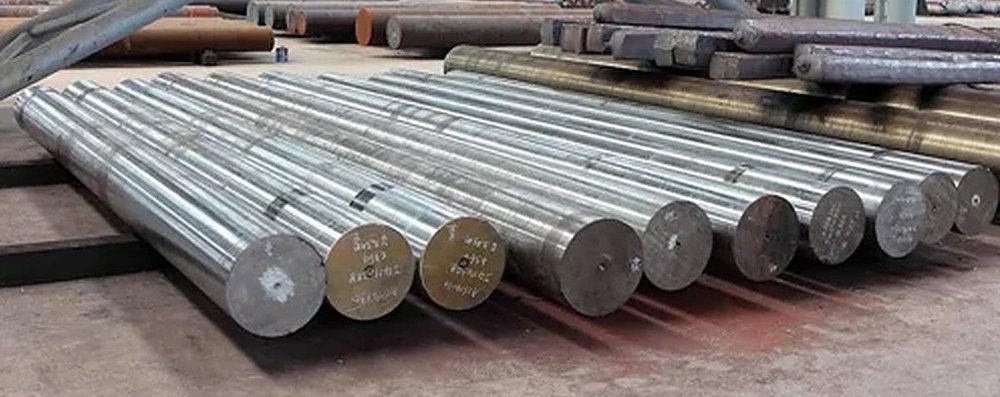
MS (Mild Steel) Carbon Steel Bar is a low carbon steel, characterized by its ease of fabrication and suitability for a variety of applications. Mild steel is one of the most commonly used types of steel in engineering and construction because of its balance of strength, toughness, and formability. It is easily welded, drilled, and machined, making it an ideal material for both structural and non-structural purposes. MS steel bars are widely used in manufacturing, automotive, and construction industries.
Uses/Applications of MS Carbon Steel Grade:
MS carbon steel is utilized in a wide range of industrial and structural applications, such as:
- Construction: Used in the production of structural beams, channels, and plates for building frameworks.
- Automotive: Ideal for automotive body components, chassis, and other structural parts that do not require high-strength steel.
- Manufacturing: Used for producing machinery parts, shafts, and engine components.
Properties of MS Carbon Steel Grade:
- Low carbon content (typically 0.05 – 0.25% carbon) provides improved ductility and formability.
- Good weldability and machinability due to its low carbon content.
- Moderate strength: Adequate strength for general-purpose use, although not suitable for high-stress applications.
- Excellent surface finish: Can be produced with smooth finishes for ease of coating and painting.
- Versatile: Can be cold worked, hot worked, and heat-treated to achieve the desired mechanical properties.
- Pipes and Tubing: Widely used in the manufacture of pipes for carrying water, gas, and other fluids.
- General Fabrication: Excellent for use in the creation of hardware, structural elements, and industrial equipment.
- Furniture Manufacturing: Common in the creation of various types of furniture frames and components.
Chemical Composition (Typical):
| Element | Content (%) |
| Carbon (C) | 0.05 – 0.25 |
| Manganese (Mn) | 0.30 – 0.60 |
| Silicon (Si) | ≤ 0.50 |
| Phosphorus (P) | ≤ 0.04 |
| Sulfur (S) | ≤ 0.05 |
| Iron (Fe) | Balance |
Mechanical Properties (Typical):
| Property | Value |
| Tensile Strength | 350 – 500 MPa |
| Yield Strength | 180 – 250 MPa |
| Elongation (in 50 mm) | 20 – 30% |
| Impact Strength | 25 – 50 J |
| Hardness (Brinell) | 120 – 160 HB |
| Modulus of Elasticity | 210 GPa |
Physical Properties:
| Property | Value |
| Density | 7.85 g/cm³ |
| Specific Gravity | 7.85 |
| Thermal Conductivity | ~50 W/m·K |
| Electrical Resistivity | ~0.17 µΩ·m |
| Specific Heat Capacity | ~460 J/kg·K |
| Coefficient of Thermal Expansion | 12 x 10⁻⁶ /°C |
Forging:
- Forging Temperature: MS carbon steel can be forged at temperatures between 1100°C and 1250°C for optimal mechanical properties.
- Optimal Forging Temperature: The range of 1150°C to 1200°C is ideal for achieving a uniform microstructure and desired strength.
- Cooling: Slow cooling is recommended after forging to relieve stresses and prevent cracking.
Heat Treatment:
MS carbon steel is versatile in terms of heat treatment. Common methods include:
- Annealing: Heat to 700°C – 750°C and cool slowly in air or furnace to soften the material, making it easier to machine.
- Normalizing: Heat to 850°C – 900°C and air cool for improved toughness and refined grain structure.
- Quenching and Tempering: For higher strength, heat to 830°C – 870°C, quench in water or oil, and temper at 550°C – 650°C to enhance toughness and reduce brittleness.
Dimensional Tolerances:
- Hot Rolled Bars: Standard tolerances as per industry norms such as IS 2062 or BS 970.
- Cold Drawn Bars: Provides better dimensional accuracy, smoother surfaces, and tighter tolerances.
- Standard Sizes: Available in various diameters, lengths, and thicknesses based on customer requirements.
- Custom Sizes: Can be manufactured based on specific requirements for certain applications.
- Hardening: Quenching after heating to 830°C – 860°C increases hardness, though not typically used for MS steel due to its low carbon content.
Machinability:
- Excellent machinability: MS carbon steel is easy to machine, making it a popular choice for manufacturing components.
- Drilling, turning, and milling operations are simple and can be completed with ease.
- Lubrication and coolants should be used to enhance tool life and improve surface finish.
- Surface finish is smooth after machining, especially when the steel is normalized or annealed.
Corrosion Resistance:
- Moderate corrosion resistance: Due to its low alloy content, MS carbon steel can corrode when exposed to moisture and harsh environmental conditions.
- Protective coatings: Painting, galvanizing, or applying corrosion-resistant coatings can significantly improve the steel’s ability to resist rust and corrosion.
- Corrosion under specific conditions: In marine or acidic environments, corrosion resistance may be reduced, and additional protective measures are recommended.
Weldability:
- Good weldability: MS carbon steel is highly weldable using standard welding methods such as arc welding, MIG, and TIG welding.
- Preheating: Not typically required for thin sections, but may be necessary for thicker sections to prevent thermal stresses.
- Welding Electrodes: Mild steel electrodes can be used for welding MS bars.
- Post-weld Heat Treatment: Not always required but may be used to relieve stresses and improve mechanical properties.
Available Form:
- Hot Rolled Bars: Available in different diameters and lengths.
- Cold Drawn Bars: Used where dimensional accuracy and surface finish are important.
- Forged Bars: Available in custom shapes and sizes depending on specific requirements.
- Precision Ground Bars: Available for applications requiring tight tolerances.
- Standard and Custom Sizes: Available in various forms based on customer needs.
Conclusion:
MS Carbon Steel Bar is a versatile and economical material suitable for a wide range of applications in construction, manufacturing, automotive, and general fabrication. While it has moderate strength and corrosion resistance, its excellent machinability and formability make it ideal for a broad spectrum of uses. When properly heat-treated or protected, MS steel offers great performance for both structural and mechanical components. This material is essential in industries that require reliable, cost-effective solutions for general-purpose applications.