
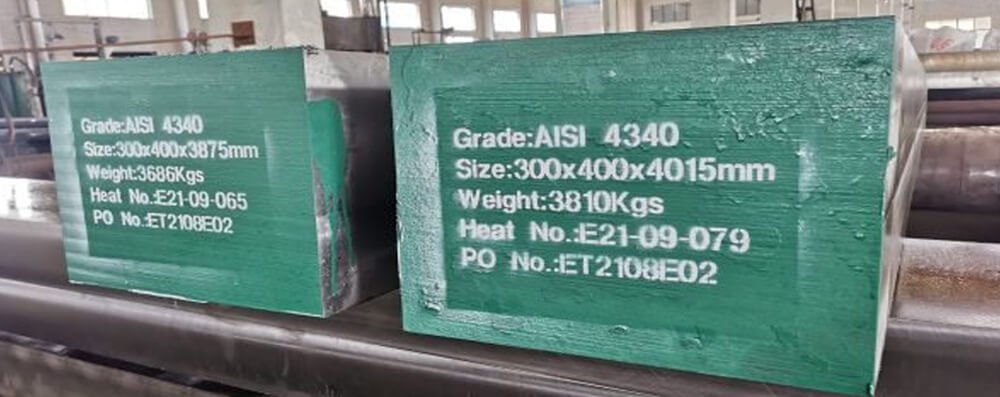
Introduction
AISI 4340 is a high-strength, low-alloy steel composed of nickel, chromium, and molybdenum, giving it excellent hardenability and toughness. This alloy is primarily used in aerospace, automotive, and heavy machinery applications where high strength, resistance to wear, and fatigue resistance are necessary. AISI 4340 alloy steel is commonly used for components that need to endure high levels of stress and demand good impact resistance at elevated temperatures.
Properties of AISI 4340 Alloy Steel Bar:
- Hardness: AISI 4340 is known for its high tensile strength and hardness properties, making it suitable for heavy-duty applications.
- Strength: This steel exhibits exceptional tensile strength, capable of withstanding high levels of mechanical stress.
- Toughness: It offers a high degree of toughness, even in the tough heat-treated conditions.
- Fatigue Strength: Its fatigue strength makes it ideal for applications requiring resistance to repetitive forces or loading cycles.
- Ductility: Despite its hardness and tensile strength, AISI 4340 maintains good ductility under the right conditions.
Chemical Composition:
The chemical composition of AISI 4340 alloy steel includes:
- Carbon (C): 0.38–0.43%
- Manganese (Mn): 0.60–0.80%
- Silicon (Si): 0.20–0.35%
- Chromium (Cr): 0.70–0.90%
- Nickel (Ni): 1.65–2.00%
- Molybdenum (Mo): 0.20–0.30%
- Sulfur (S): ≤ 0.05%
- Phosphorus (P): ≤ 0.04%
Uses/Applications of AISI 4340 Alloy Steel Bar:
- Aerospace Industry: Used in aircraft landing gear, turbine shafts, and high-strength fasteners.
- Automotive Industry: Used in critical automotive components such as gears, shafts, and axles.
- Military Applications: Employed in the manufacturing of military-grade equipment, weaponry, and armor.
- Heavy Machinery: Applied in the construction of heavy-duty machinery components that require high fatigue resistance and strength.
- Tooling and Die Production: Used for making tools, dies, and parts subjected to high wear and tear.
These elements contribute to the alloy’s high strength, wear resistance, and ability to be heat-treated to achieve desired mechanical properties.
Mechanical Properties:
- Tensile Strength: Approximately 745–1,035 MPa (108,000–150,000 psi)
- Yield Strength: Around 435–750 MPa (63,000–109,000 psi)
- Elongation: 10–15% in 50mm gauge length
- Hardness: Can be hardened to a Brinell hardness range of 300-350 HB
- Impact Toughness: Impact energy in the range of 27–55 Joules at -20°C depending on the heat treatment.
Physical Properties:
- Density: 7.85 g/cm³ (7850 kg/m³)
- Modulus of Elasticity: Approximately 200 GPa (29 x 10⁶ psi)
- Thermal Conductivity: 45.5 W/mK at 25°C
- Specific Heat: 0.46 J/g·°C
- Melting Point: Approximately 1,400–1,420°C (2,552–2,588°F)
Forging:
AISI 4340 steel should be heated to a temperature range of 1,180–1,200°C (2,156–2,192°F) for forging. After forging, it should be cooled gradually to room temperature in air or furnace to prevent the development of stresses or cracks.
Heat Treatment:
- Annealing: AISI 4340 can be annealed at 850°C (1,562°F) followed by slow cooling in the furnace for optimum machinability.
- Hardening: The alloy is commonly hardened by quenching in oil or water after heating to 830–880°C (1,526–1,616°F).
- Tempering: To achieve desired strength and toughness, tempering is done at temperatures between 400°C–600°C (752°F–1,112°F) after quenching.
- Stress Relieving: Stress relief treatment is conducted at 600–650°C (1,112–1,202°F) for 1 hour to relieve internal stresses.
Dimensional Tolerances:
AISI 4340 alloy steel bars conform to ASTM A29 standards, with precision in dimensions depending on the product’s intended use. The standard tolerances are defined as per the bar sizes and finishing requirements.
Machinability:
AISI 4340 steel exhibits good machinability in both annealed and normalized conditions. However, its hardening process makes it difficult to machine in the hardened state. For best results, it is recommended to use carbide tools when machining in the hardened condition.
Corrosion Resistance:
While AISI 4340 has moderate resistance to corrosion, it is not ideal for environments that require high resistance to corrosion or oxidation.
In harsh environments, it is recommended to use protective coatings or ensure proper surface finishing to protect against rusting.
Weldability:
AISI 4340 has moderate weldability, but preheating to a temperature of 150–200°C (302–392°F) and post-weld heat treatment are recommended to minimize cracking and ensure good weld quality. This alloy should be welded using standard welding processes such as arc welding, MIG welding, or TIG welding, and filler materials should be carefully selected.
Available Form:
- Round Bars
- Flat Bars
- Forged Bars
- Cold Drawn Bars
- Bright Bars
Conclusion:
AISI 4340 alloy steel is a versatile and high-performance material that provides an excellent balance of strength, toughness, and fatigue resistance, making it suitable for use in demanding applications across various industries, particularly aerospace, automotive, and heavy machinery. Its ability to undergo heat treatment to achieve desirable mechanical properties further enhances its adaptability in different applications.
For any requirement involving high-strength steel, AISI 4340 is a reliable choice offering durability and resistance to wear and fatigue, making it a preferred material for engineering professionals and industries worldwide.